

Research Projects
Delivery of Professional Learning for GCE AS & A-Level Digital Technology for Schools
Dr Sabeen Tahir, Dr Fiona Carroll & Dr Sammy Chapman
In a collaboration between the Centre for International Research on Interactive Technologies in Teaching and Learning (CIRITTL) and The Creative Computing Research Centre (CCRC) , this project aims to deliver comprehensive, bilingual professional learning sessions to equip teachers in Wales with the skills and knowledge for effectively teaching and evaluating Unit 4 Digital Solutions.
Delivered by Cardiff School of Technologies (CST), and supported by Cardiff School of Education & Social Policy (CSESP), the Welsh Government-funded project aims to deliver the following objectives:
- Develop teachers’ understanding of transactional websites and equip them to support learners in planning, designing, and developing functional transactional websites;
- Provide teacher training on data capture, storage, and processing, including relational database management system design and SQL implementation;
- Guide teachers on evaluating NEA submissions, including preparing the assessments, feedback, and evaluations;
- Providing all available resources and learning materials bilingually for ongoing teacher reference.

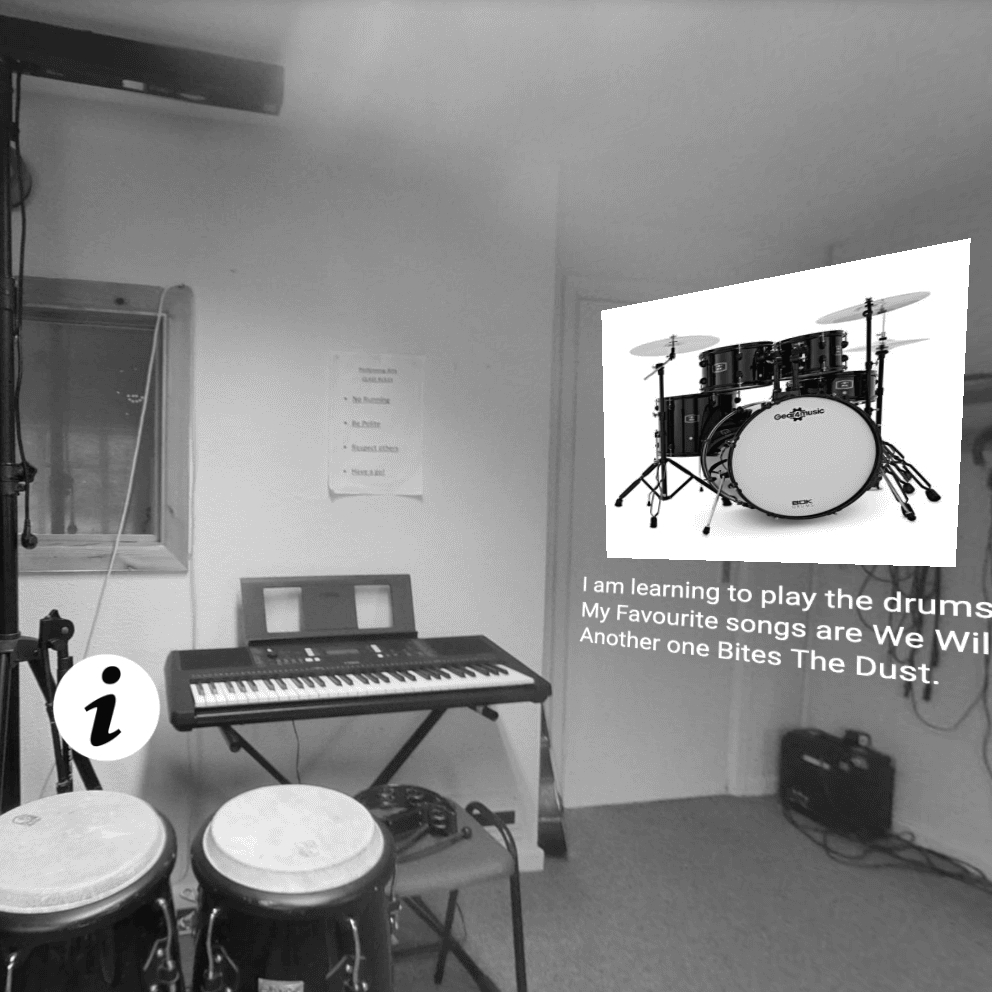
Interactive 360° Images in a Special School Setting
Dr Sammy Chapman & Prof. Gary Beauchamp
This project explored the use of interactive 360° images in collaboration with a Welsh special school setting. The project encouraged learners aged 7 to 11 to create their own learner-led interactive 360° images, showcasing their favourite place on the school grounds.
You can view the developed classification, and the associated peer-reviewed journal article using the button below.
Understanding the Effectiveness of Using 360º Immersive Photographs on Primary-Age Pupils’ Learning and Engagement
Gemma Zeeman
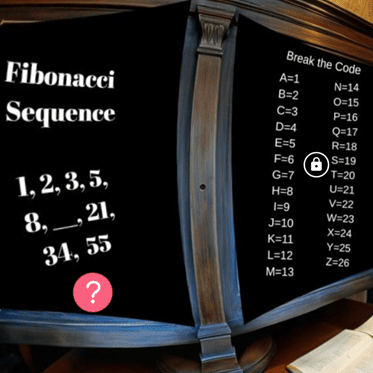
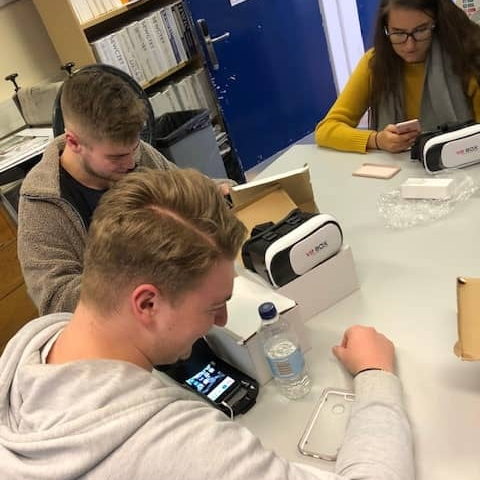
This research project investigated the use of Thinglink, an immersive technology platform, to enhance learning and engagement in a Year 3/4 class at All Saints Primary School, Wrexham. Pupils participated in an interactive escape room challenge aligned with their current topic, Amazing Discoveries, and subsequently created their own virtual learning environments using multimedia elements such as video, audio, and imagery.
The findings suggest immersive technologies like Thinglink have strong potential to enrich primary education through differentiated, pupil-led, and cross-curricular learning experiences.
You can read more about the project using the button below.
Breaking Down Classroom Walls with Digital Collaboration
Gary Beauchamp, Nick Young, Andrew Joyce-Gibbons & Xela Bouzó Dafauce
How can we help children in different parts of the country collaborate as seamlessly as if they were in the same room? This study demonstrates how innovative technology, combined with structured talk, can create a powerful learning environment where pupils not only work together across a distance of 200 miles but do so so effectively that they successfully solve a complex problem.
You can view the open access paper and learn more about the project using the buttons below.
Exploring synchronous, remote collaborative interaction between learners using multi-touch tables and video conferencing in UK primary schools
Gary Beauchamp, Andrew Joyce-Gibbons, James Mc Naughton, Nick Young & Tom Crick
This study explores remote, non-collocated collaboration via multi-touch table (SynergyNet) and video conferencing software (Skype). Twenty-four participants (aged 10-11 years) in two locations—primary school classrooms located 300 miles apart in the UK—engaged in simultaneous collaborative activity to solve a History mystery task.
You can view the open access paper for this project using the button below.
Our School Through Our Eyes: A Child-Centred 360° Journey
Dr Stephen Atherton, Dr Sanjay Dutta & Dr Panna Karlinger
As part of the WCLD project, Aberystwyth University carried out an innovative 360° camera initiative with the pupils of Penllwyn and Penrhyn-coch Schools, where the children themselves introduced their schools through immersive video tours, complete with bilingual (Welsh and English) voiceovers that showcased their environments and favourite spaces.
The outputs, including the final 360° videos, stand as a testament to the project’s value: combining educational enrichment, community engagement, and academic inquiry in a way that powerfully highlights the potential of immersive media in learning and research contexts.
Navigating Belonging, Vulnerability, and Identity in Welsh Youth Through Immersive Technology
Monty Kennard & Catrin Street-Mattox
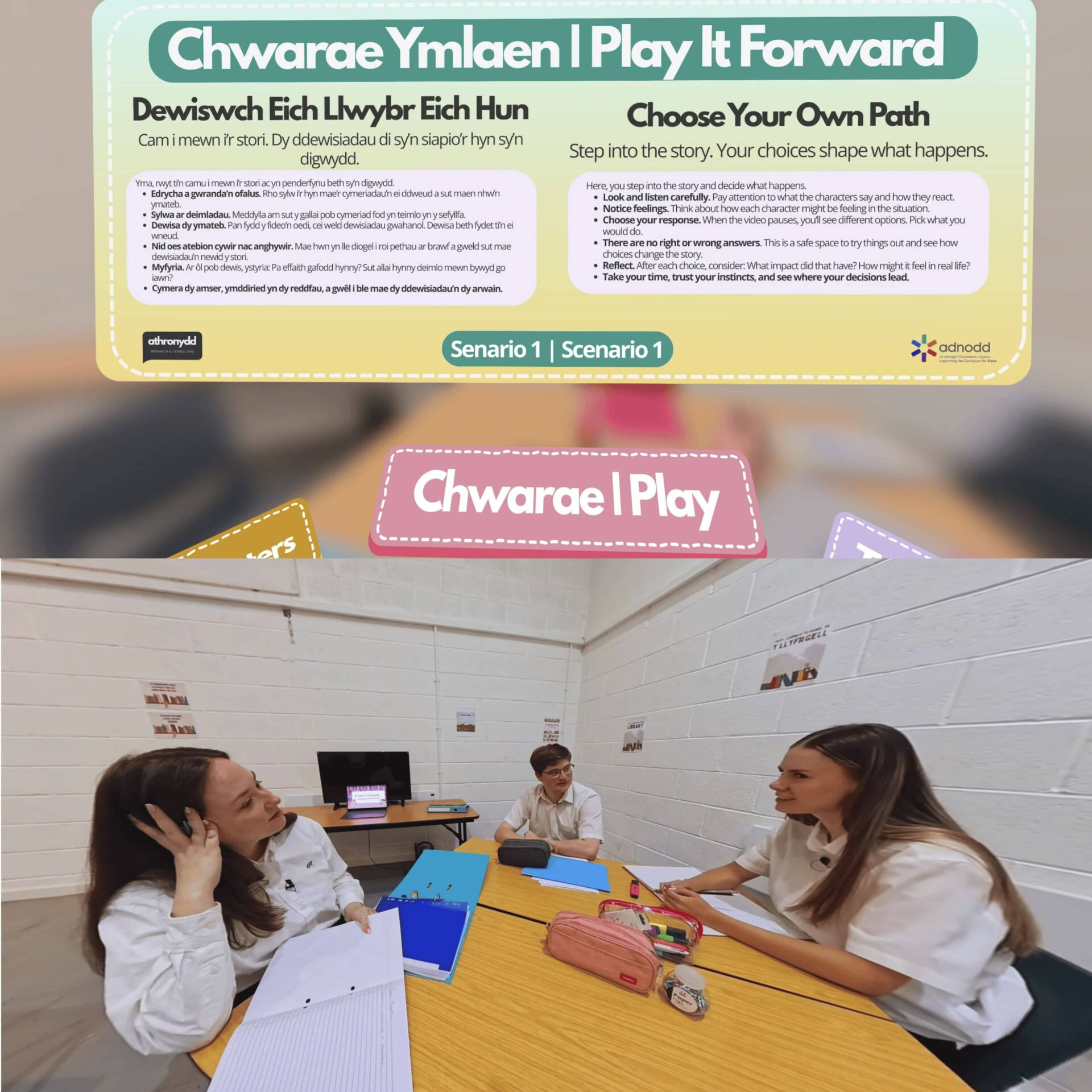
Funded by Adnodd (a Welsh Government Commissioning Body), this project explores how immersive technologies can facilitate discussion and learning about wellbeing, inclusion, belonging, vulnerability, and identity for young people in Wales. By creating a ‘choose your own adventure’ style, interactive 360 resource, the project allows safe exploration of these topics and serves as a gateway for initiating discussions among educators.
Moving forward, the vision is to co-create these scenarios in partnership with young people who have lived experience. This collaboration will also lead to further research investigating student and teacher perceptions of using immersive technology to explore these sensitive topics.
The current series of scenarios, titled ‘Chwarae Ymlaen | Play it Forward’, is in the prototype and demo phase. Initial background research was conducted through a scoping review, followed by design and development of scenario concepts and creation processes.
Immersive Technology with Llanberis Slate Museum and Ysgol Dolbadarn, Llanberis
Dr Julian Ayres & Monty Kennard
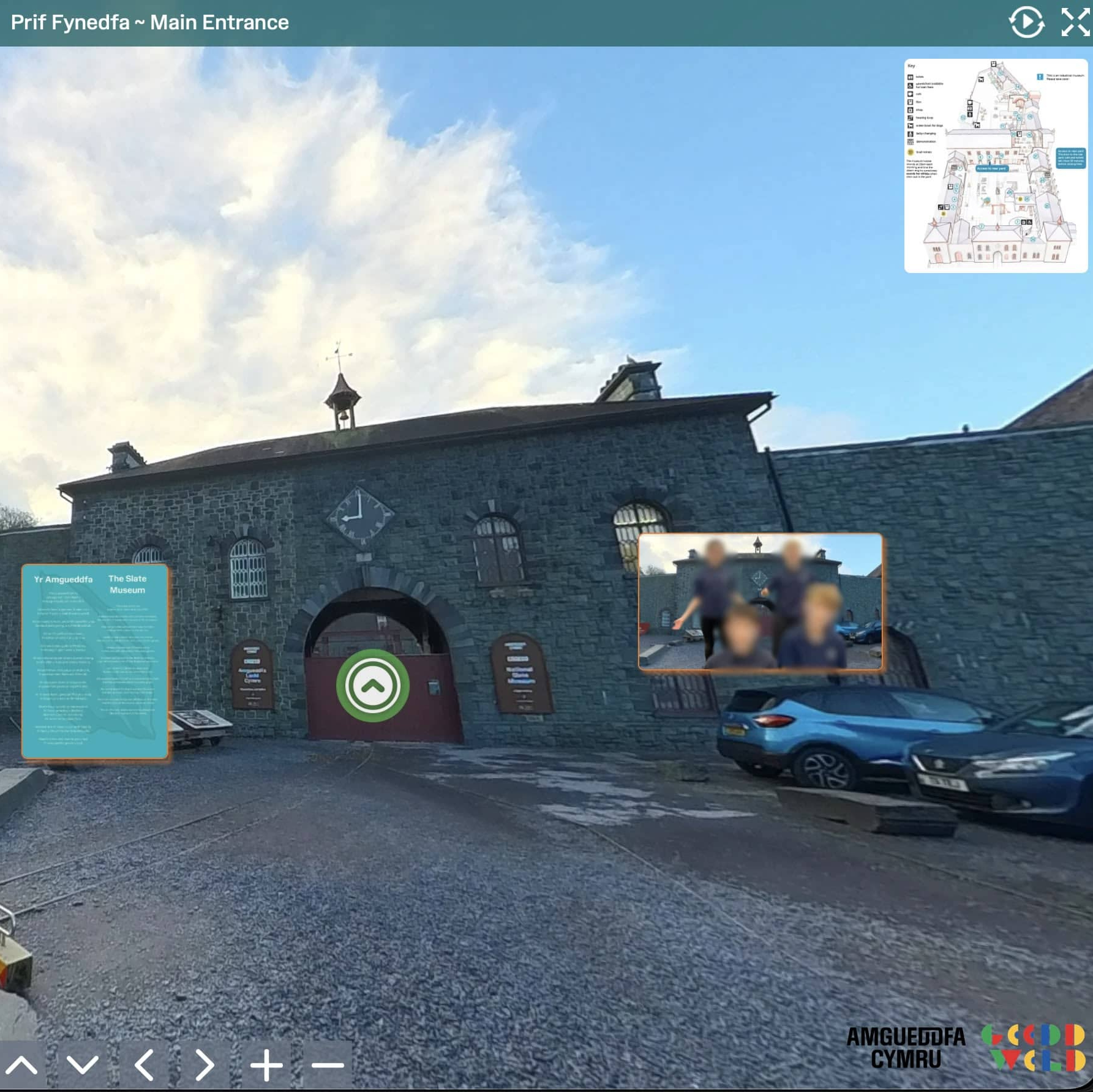
The National Slate Museum in Llanberis was closing for redevelopment in November 2024. As part of the WCLD project, Dr Julian Ayres and Monty Kennard helped the museum create a VR school trip using 360° photos, green screen, and student-made content. The project aims to preserve the museum’s heritage through immersive tech, with a full VR tour to be completed by 2026.
On the project day, 31 students from the primary school were split into three groups, each given a map of the museum and tasked with identifying areas of interest for future visitors. Each group was equipped with an Insta360 X3 camera and a stand, and they were instructed to capture HDR360 photos of their chosen locations.
The students took over 15 individual 360-degree photos, which were then uploaded to the online tool ‘ThingLink.’ Dr. Ayres used these images to create a walk-through tour of the site (see Image).